
TEST & MEASUREMENT APPLICATION NOTES AND WHITE PAPERS
-
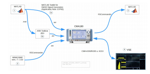
 Transmit And Receive Testing Of Digital Waveforms Using R&S®CMA180
The compact R&S®CMA180 Radio Test Set allows straightforward tests on devices that use analog or digital modulation and demodulation formats. This application note focuses on the use of the digital radio capabilities for measurements on radio transceiving devices in terms of their functionality and parameter characterization. Also shown is how to use the instrument with the various software tools available from Rohde & Schwarz for creating and evaluating digitally modulated signals.
-
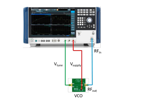
 VCO Measurements With FSPN Phase Noise Analyzer
This application note provides a short technical introduction to voltage-controlled oscillators and explains the most common and the most important measurements made during the VCO characterization process.
-
 Speeding Up Reflection Measurements On Antenna Systems
Reflection measurements are a common way of assessing antenna system performance. When a minimum amount of the transmitted signal is reflected, it indicates that the transmission energy can reach the intended coverage. Undesired high reflection causes the system to be inefficient and can damage components. This application note presents solutions for aiding fast and efficient reflection measurements on antenna systems to get it right the first time.
-
 Simplify Coexistence And Interference Testing For GNSS Receivers
The R&S®SMW200A GNSS simulator offers an easy and convenient way to test your receiver design against a wide variety of potential interferers and jammers. Test cases extend from simple coexistence simulations to complex interference scenarios with localized emitters.
-
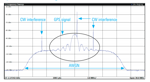
DPX® Acquisition Technology For Spectrum Analyzers Fundamentals
Signal detection is the first step in characterizing, diagnosing, understanding, and resolving any problem that relates to time-variant signals. Engineers are requiring better tools to help find and interpret complex signal behaviors and interactions. The Tektronix Digital Phosphor technology, or DPX®, can be used in Real-Time Spectrum Analyzers (RSAs) to reveal signal details that are completely missed by conventional spectrum analyzers and vector signal analyzers. This white paper describes the methods behind the DPX Live RF spectrum display, swept DPX, Time-Domain DPX Displays, DPX Density™ measurements, DPX Density™ and Frequency Edge triggers.
TEST & MEASUREMENT SOLUTIONS
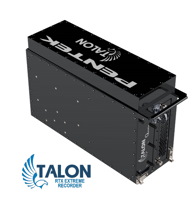
Pentek offers the Talon® RTX 2684 as a 26 GHz sentinel intelligent signal scanner recording system. The system provides SIGINT engineers the ability to scan the RF spectrum from 1 GHz to 26 GHz for signals of interest and monitor or record bandwidths up to 500 MHz wide.
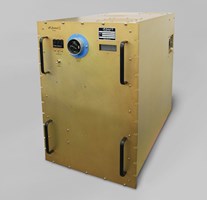
The dB-3907 TWT Amplifier (TWTA) is designed to use two wideband, periodic permanent magnet (PPM)-focused TWTs to amplify CW, AM, FM or pulse-modulated signals. The dB-3907 offers higher saturated output power and improved harmonic performance when compared to a single TWT approach.

Qorvo introduces the QPC2040 single-pole, double-throw (SPDT) switch operating within the 8 – 12 GHz frequency range for commercial and military radar, communications, electronic warfare, test instrumentation, and other general purpose applications. The switch typically supports 10 W input power handling at control voltages of 0/−2 V for both CW and pulsed RF operations.

Electrostatic discharge testing is utilized worldwide by electronics manufacturers to determine the ESD susceptibility of their devices. It is extremely difficult to estimate the exact cost of ESD loss annually, but it can safely be stated that ESD requires the development and testing of many hardware prototypes and contributes to a high number of warranty claims and loss of consumer confidence if failure occurs in the hands of the customer. Given the high cost in time and materials associated with ESD hardware testing, the ability to simulate the ESD testing process in XFdtd is extremely valuable, allowing engineers to pinpoint locations susceptible to ESD damage and optimize ESD mitigation during the concept and design stage of product development.

Holzworth’s multi-channel RF synthesizer architecture is a complete success story. These compact, 1U high, 19in rack mountable chassis can be configured with up to 8 independently tunable channels. All integrated channels are 100% phase coherent. Holzworth has designed the multi-channel platform for integration of our HSM Series Single Channel Synthesizers to maximize channel-to-channel stability via a conductively cooled, fan-less enclosure.
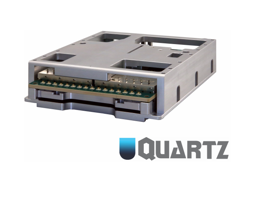
The Model 6350S is a small form factor 8-channel A/D & D/A subsystem designed for a variety of applications including high-bandwidth data streaming, waveform signal generators, multimode data acquisition, and other electronic warfare systems. Designed to be integrated into larger systems with minimal design effort, the 6350S delivers the performance and high-channel density of RFSoC in a small, convenient footprint.

The 50S-2133 SMA from JFW is a solid-state, self-terminating 1P8T RF switch designed for economical automated RF testing applications in the 20 – 5,000 MHz frequency range.
TEST & MEASUREMENT NEWS
- Rohde & Schwarz Mobile Network Testing Forum Goes Hybrid For 2023
- JCAS Reference Test Setup From Rohde & Schwarz Receives GTI Award For Innovative Breakthrough In Mobile Technology
- CAICT Selected R&S CMX500 OBT To Enable SPEAG DASY8 System For SAR And HAC Tests Of 5G NR Devices
- Rohde & Schwarz Announces Major Boost For Phase Noise Analysis And VCO Measurements Portfolio
- AVL And Rohde & Schwarz Collaborate To Automate And Speed Up EMC Tests Under Real Driving Conditions


