Laminates
PRODUCTS AND SERVICES
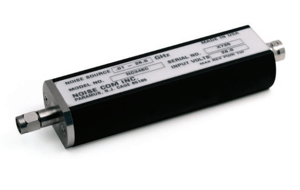
The Noisecom AWGN NC346 Series comprises broadband calibrated noise sources for precise noise figure measurement applications. These noise sources have broadband coverage and excellent temperature and voltage stability, for the finest noise figure meter-compatible laboratory standards.
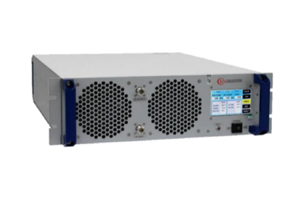
The AMP20094 is a compact solid-state high-power amplifier tailored for various applications including EMI/RFI, lab experiments, CW/Pulse, and communication tasks.

These end-fed sleeve dipole antennas are truly omni-directional having excellent symmetry with low VSWR. These dipoles are an excellent solution as a reference for antenna gain measurements, wireless testing and chamber reflectivity evaluation. The end-fed connection point allows better performance in symmetry, ideal for the requirement of a truly omni-directional antenna.

The NuWaves NuPower™ 11B02A-TAC2 is a fully integrated, miniature solid state power amplifier that provides ultra-wideband operation across multiple octaves from high VHF through S-band frequencies, and typically delivers 10 watts of RF power across the frequency range of 200 MHz to 2.6 GHz.

The A.H. Systems T.V. Dipole Set provides an accurate standard for precise FM, VHF, and UHF testing. Each Dipole Set is manufactured per the FCC balun design and is individually calibrated. All sets come contained in a rugged, lightweight storage case which includes 2 baluns, elements, cables, a tape measure and one clamp for tripod mounting.
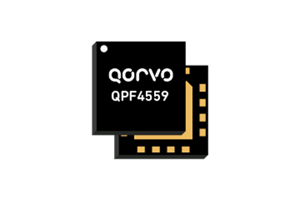
The QPF4559 is an integrated front end module (FEM) designed for Wi-Fi 7 (802.11be) systems. The compact form factor and integrated matching minimizes layout area in the application.