
TEST & MEASUREMENT APPLICATION NOTES AND WHITE PAPERS
-
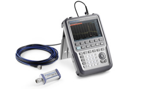
 Speeding Up Reflection Measurements On Antenna Systems
Reflection measurements are a common way of assessing antenna system performance. When a minimum amount of the transmitted signal is reflected, it indicates that the transmission energy can reach the intended coverage. Undesired high reflection causes the system to be inefficient and can damage components. This application note presents solutions for aiding fast and efficient reflection measurements on antenna systems to get it right the first time.
-
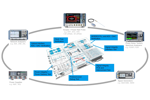
Field Probe Correction Factors
To better achieve accurate field level measurements, it is helpful to have an understanding of field probe calibrations, the factors generated, and what’s presented as data during testing. This application note presents how to utilize the factors presented for inclusion into test data, how to generate composite measurements, and why calibrations are performed at selected frequencies.
-
 Understanding Component EMC Testing for ICs
If you're producing integrated circuit (IC) products for electromagnetic environments, you must test and pass all the regulatory electromagnetic interference (EMI) and safety requirements. Electromagnetic compatibility (EMC) testing is performed to ensure these components can be used in the intended environment without failing, degrading, or causing other equipment to fail.
-
 Small Cell Testing In FR2
In the era of 5G, small cells have become pivotal in network densification. Explore the essential testing aspects of small cell devices throughout their product life cycle.
-
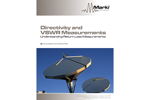
 Directivity And VSWR Measurements: Understanding Return Loss Measurements
The characterization of microwave networks requires discriminating between forward and backward traveling waves. Unfortunately no directional device is perfect, leading to potentially dramatic measurement errors. In this note we show that return loss and VSWR measurements are greatly complicated by the finite performance of the directional device used to measure the reflected power.

TEST & MEASUREMENT SOLUTIONS
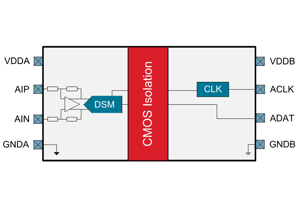
The Si894x is a galvanically isolated delta-sigma modulator which outputs a digital signal proportional to the voltage level at the input.
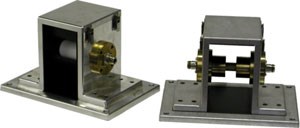
The A.H. Systems' line of Current Probe Calibration Fixtures are a great way to keep your broadband Current Probes, and Injection Current Probes calibrated and up to date. Their rugged design ensures long life, and faultless operation over the wide calibration frequency range of 10 kHz to 1000 MHz.
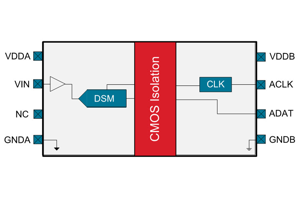
The SI893x’s 0 to 2.25 V specified input range is ideal for isolated voltage sensing. The Si8935/36/37 provides delta-sgma modulated output with flexible options for external or internally generated clock.

Pentek offers the Quartz® Model 6003 high-performance Quartz eXpress Module (QuartzXM) based on the Xilinx Zynq UltraScale+ RFSoC FPGA. The RFSoC FPGA integrates eight RF-class A/D and D/A converters into the Zynq’s multiprocessor architecture, creating a multichannel data conversion and processing solution on a single chip.
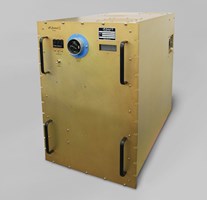
The dB-3907 TWT Amplifier (TWTA) is designed to use two wideband, periodic permanent magnet (PPM)-focused TWTs to amplify CW, AM, FM or pulse-modulated signals. The dB-3907 offers higher saturated output power and improved harmonic performance when compared to a single TWT approach.

Qorvo introduces the QPC2040 single-pole, double-throw (SPDT) switch operating within the 8 – 12 GHz frequency range for commercial and military radar, communications, electronic warfare, test instrumentation, and other general purpose applications. The switch typically supports 10 W input power handling at control voltages of 0/−2 V for both CW and pulsed RF operations.
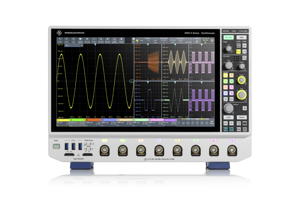
The MXO 5 Series delivers breakthrough oscilloscope technology to speed up your understanding and testing of electronic systems.
TEST & MEASUREMENT NEWS
- Rohde & Schwarz Mobile Network Testing Forum Goes Hybrid For 2023
- JCAS Reference Test Setup From Rohde & Schwarz Receives GTI Award For Innovative Breakthrough In Mobile Technology
- CAICT Selected R&S CMX500 OBT To Enable SPEAG DASY8 System For SAR And HAC Tests Of 5G NR Devices
- Rohde & Schwarz Announces Major Boost For Phase Noise Analysis And VCO Measurements Portfolio
- AVL And Rohde & Schwarz Collaborate To Automate And Speed Up EMC Tests Under Real Driving Conditions


