
RF Modules
PRODUCTS
-

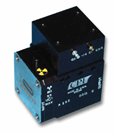
The MA9905 is an X-band receiver protector with an integral noise source. This receiver protector operates at 2.5 kW, and features a compact size for applications requiring less space.
-

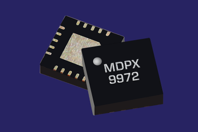
The MDPX-00006PSM is a versatile MMIC surface-mount diplexer designed to multiplex signals across two distinct frequency ranges: low-frequency DC to 10 GHz and high-frequency 12 to 28 GHz.
-

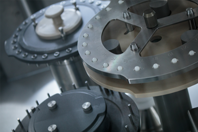
The semi-automated capsule filler is part of the Explore Range, offering the potential to simplify formulation by eliminating the need for additional ‘formulation for powder filling’ steps.
-
 Readiness")
Our team of experts are equipped to guide you through every step of any Inspection, especially Pre-Approval Inspections, due to the nature of their criticality.
-

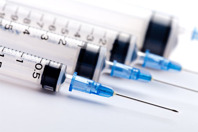
We cover the pre-assembly of a plastic syringe with cannula, as well as the final assembly of multi-component syringes (4-8 or 8-12 components).

WHITE PAPERS AND CASE STUDIES
-
 Integrated Water Intelligence: Digital Water Metering And Digital Twin Technology
Integrating digital metering with digital twins transforms raw data into actionable network intelligence. This unified approach enables precise hydraulic simulations and proactive maintenance, helping utilities eliminate operational guesswork while improving water quality and system efficiency.
-
 Actuators On Aeration Blower Valves Improve Dissolved Oxygen And Increase Overall Process Stability
Discover how installing Beck electric actuators on the aeration blower control valves has improved process stability and plant operations for a South Florida treatment plant.
-
 Mobile Gowning Cleanroom, Built To Meet ISO 7 Requirements
Uncover how Germfree designed and installed a mobile cGMP cleanroom on a 53′ tractor-trailer chassis to provide a flexible and efficient cleanroom solution tailored to the company’s needs.
-
 Cell Line Development For High-Titer Lentivirus Vector Production
Explore a groundbreaking method to significantly enhance LV vector yield using engineered HEK293T cells. This approach paves the way for more efficient and large-scale production of LV vectors.
-
 Severn Trent Exceeds Leak Reduction Targets With Innovative Itron Water Solutions
Severn Trent’s smart metering program, powered by Itron’s technology, is transforming water conservation—reducing leaks by 6 million liters, cutting costs, and empowering customers to use water more wisely.
-
 Implementing A Next-Gen MES At A Fraction Of The Cost
Discover how a top medical device manufacturer accelerated product launch by digitizing assembly processes, streamlining training, and ensuring compliance.
-
 Water Disinfection At Feldschlöesschen Brewery In Switzerland
Despite meeting European drinking water standards, contamination levels at a brewery reached as high as 800 CFU/ml, prompting the brewery to seek a reliable disinfection solution to protect the integrity of its production processes.
-
 Container Closure Integrity Test Method Development For Autoinjectors
Discover an autoinjector technology that leverages laser-based headspace analysis for container closure integrity to advance biologic drug delivery with precision, safety, and regulatory confidence.
-
 Acoustic Inspection Helps Campbell River Optimize Inspection Program
In this case study, explore how incorporating the SL-RAT into their maintenance program has realized significant savings for the city of Campbell River.
-
 Whether Half-Empty Or Half Full, Krohne Helps Back River Accurately Measure Flow
If a pipe in a wastewater treatment plant is only 50% filled, it doesn't matter whether you call a glass half full or half empty. When it comes to measuring the liquid in that pipe, either way presents a significant problem.
-
 Partnering For Precision In An IPF Study: Securing Timely Deliverables And Key Endpoints
A pharmaceutical company enlisted Worldwide Clinical Trials to help achieve on-time results for their Phase IIa IPF clinical trial, enabling them to manage vendors and meet challenging deadlines.
-
 Aquatic Invasive Species Control At Hoover Dam
In this case study, learn why Hoover Dam installed Atlantium's HOD UV treatment system to protect its cooling water systems from Quagga mussels.









NEWS
-
ZEISS Introduces The New Smartzoom 100: The Future Of Digital Microscopy For Efficient Optical Inspections5/6/2025
ZEISS presents the new ZEISS Smartzoom 100, an innovative digital microscope for fast and efficient quality assurance.
-
Canada Accelerates Transition To Zero-Emissions Vehicles8/13/2025
Canada is leading the way on the infrastructure, innovation and partnerships required to transition to electric transportation.
-
Masdar And Iberdrola Announce €5.2B UK Offshore Wind Deal And Full Energization Of 476MW German Offshore Wind Farm7/10/2025
Masdar, a global clean energy leader, and Iberdrola, one of the world’s largest energy companies, have reached two major milestones with a €5.2B co-investment in the UK’s East Anglia THREE offshore wind farm – the largest offshore wind transaction of the decade – and the full energization of their 476MW Baltic Eagle project in Germany.
-
KBR Expands Support For Saudi's Energy Future1/22/2025
KBR announced today it has been awarded a contract to support sustainable production of energy resources in Saudi Arabia by contributing to the delivery of Saudi Aramco’s Master Expansion Program and increasing gas handling capacity at key regional locations.
-
Silo Pharma Expands Intellectual Property Portfolio With Patent Application For Exclusively Licensed Alzheimer's Drug4/28/2025
Silo Pharma, Inc. (Nasdaq: SILO) (“Silo” or the “Company”), a developmental stage biopharmaceutical company focused on novel therapeutics and drug delivery systems, today announced the filing of a patent application with the U.S. Patent and Trademark Office (USPTO) focused on the neurology drug SPC-14, an intranasal compound for the treatment of Alzheimer’s disease (AD) exclusively licensed to Silo Pharma from Columbia University.
ABOUT
About Nutrient Removal
Nutrient removal from wastewater consists of treating wastewater to remove nitrogen and phosphorus before it reenters natural waterways. High levels of nitrogen and phosphorus in wastewater cause eutrophication, a process where excess nutrients stimulate excessive plant growth such as algal blooms and cyanobacteria. The decomposition of the algae by bacteria uses up the oxygen in the water causing other organisms to die. This creates more organic matter for the bacteria to decompose. In addition, some algal blooms can produce toxins that contaminate drinking water supplies.
As authorized by the Clean Water Act, the National Pollutant Discharge Elimination System (NPDES) permit program regulates point sources, such as municipal wastewater treatment plants, that discharge pollutants as effluent into the waters of the United States. In recent years, many of the States’ environmental bodies have lowered nutrient limits to arrest eutrophication. Maryland’s effort to protect the Chesapeake Bay and its tidal tributaries is perhaps the most notable example of nutrient removal in the US. Nutrient removal continues to be a growing area of focus for wastewater treatment throughout the world.
The removal of nitrogen and phosphorus require different nutrient removal processes. To remove nitrogen, the nitrogen is oxidized from ammonia to become nitrate through a process called nitrification. This process is then followed by denitrification where the nitrate is reduced to nitrogen gas which is released to the atmosphere and removed from the wastewater.
Nitrification is a two-step aerobic process which typically takes place in aeration tanks. Denitrification requires anoxic conditions to encourage the appropriate biological conditions to form. The activated sludge process is often used to reduce nitrate to nitrogen gas in anoxic or denitrification tanks.
Phosphorus can be removed biologically using polyphosphate accumulating organisms (PAOs) which accumulate large quantities of phosphorus within their cells and separate it from treated water. Phosphorus removal can also be achieved by chemical removal. Once removed as sludge, phosphorus may be stored in a land fill. However, many municipalities and treatment facilities are looking to resell the biosolids for use in fertilizer.