
TriQuint Announces Integrated GPS Front-End Module Combining Two Filters
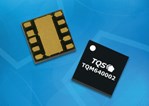
Hillsboro, OR - TriQuint Semiconductor recently announced the release of its newest highly-integrated RF module for GPS (global positioning satellite) navigation systems. The new front-end module combines filter and low noise amplifier (LNA) functions in the smallest package available today, enabling new wireless handset applications as well as mobile and automotive designs. The device expands TriQuint's already extensive GPS portfolio including surface acoustic wave (SAW) filters now in use by a majority of the world's leading personal navigation device (PND) makers.
TriQuint Semiconductor has shipped more than 130 million filters to global GPS manufacturers including three of the top four PND vendors as determined by Canalys estimates in 20071. According to GPS SAW filter shipment records, TriQuint supplied the world's leading PND manufacturers with 66% of the total SAW filters used across the globe last year and continues its leadership in 2008.
"The market for GPS is clearly moving toward integrated modules. It's a similar pattern we've seen and continue to see in the mobile phone handset market," remarked TriQuint GPS Product Marketing Manager, Joshua Raha. "TriQuint is already the world's largest GPS SAW filter manufacturer and a leading designer and manufacturer of highly-integrated handset modules. It was a natural move for us to bring our integration expertise from handsets to the GPS space."
Mr. Raha stated that TriQuint's new GPS module is unique in several ways, including a 3x3mm form factor that makes it ideal for adding location-based functions to size-conscious wireless handsets. The compact size also makes it highly suited for new generations of mobile GPS consumer devices, industrial and automotive applications.
The TQM640002 includes TriQuint's smallest two-in-one SAW filter and can operate with either 1.8 or 2.8 supply voltages. The module's filters provide superior rejection compared to other market solutions. Better rejection is a key factor for manufacturers who need to filter out signal interference. Filtering is especially important for GPS products because satellite-based location data signals are relatively weak compared to terrestrial RF sources. "Better rejection preserves the signal you want while filtering out the rest," Mr. Raha said. "This is particularly important in the hostile RF environment seen in handset applications where noise or spurious signals interfere with functions like simultaneous voice and GPS usage. The out-of-band cellular signals can compress the GPS LNA, rendering the entire GPS chain unusable. The rejection our new module provides effectively protects that chain, enabling simultaneous GPS and voice communication on a cell phone."
"This new module also offers the advantage of zero matching. This ‘plug-and-play' approach simplifies both design and manufacturing of our customers' GPS-enabled devices. The fact that there are no matching components results in additional space on the board. This is clearly a key advantage in handset applications where every square millimeter saved enables another function or a smaller form factor," said Mr. Raha.
TriQuint engineered its newest module in consultation with several major GPS and personal navigation pioneers, including SiRF Technology, Inc., a world leader in creating solutions that use the GPS system to bring location awareness to an expanding array of consumer products. "The location-based services market has great potential, with GPS now appearing in a wide range of exciting new consumer and industrial products," according to Tim McCarthy, Director of SiRF's Wireless Marketing Group. "The new TriQuint module will make it easier to add GPS to these new products."
Consumer demand for products based on global navigation satellite system (GNSS) technology is accelerating. According to Strategy Analytics Director of RF and Wireless Components, Chris Taylor, shipments of GPS products will continue to grow world-wide; the newest devices in the market will benefit from integrated modules such as TriQuint's latest product release.
"Strategy Analytics estimates that more than 200 million GPS-capable electronic devices will ship this year, and that shipments will continue to increase at an average compound annual growth rate of 27 percent through 2012 as use of GPS expands in cell phones, PDAs, mobile computing devices and vehicles. The GPS radios in most of these systems benefit from higher sensitivity and faster time to ‘first fix' (time a GPS receiver needs to acquire navigation data and calculate a solution) when used with an external LNA such as TriQuint's compact TQM640002," said Mr. Taylor
SOURCE: TriQuint Semiconductor