
The K-W Split: A Century of Radio History

By John Oncea, Chief Editor, Clinical Tech Leader
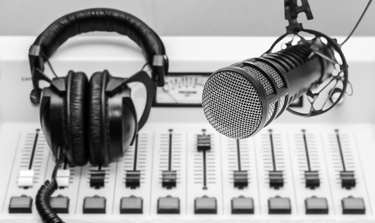
Turn on the radio and you'll hear WABC in New York or KROQ in LA. Those different letters aren't random—they're part of a system dating back to the 1920s.
Since it first aired on December 17, 1989, The Simpsons has become the longest-running American animated series, the longest-running American sitcom, and the longest-running American scripted primetime television series, both in seasons and individual episodes.
It also has spewed several enduring mysteries – from an ever-changing house number (the Simpsons’ address has been given as 59, 94, 430, 723, 1024, 1092, and 1094 Evergreen Terrace) to how Maude Flanders and Edna Krabappel could have been at Lisa Simpson’s wedding when they both died years before the nuptials took place.
But the biggest mystery is which state the Simpsons’ hometown of Springfield is part of. One attempt to narrow the possibilities down, according to Simpsons World, is by digging into the town’s radio station, KBBL, broadcasting on 102.5 FM and serving the area with a male-targeted AC format.
Anyway, anyone who knows radio knows the prefix “K” represents broadcasting facilities west of the Mississippi River, meaning Springfield must be located somewhere west of that river. However, if the station started broadcasting with the abbreviation before 1928 (when the FCC regulation went into effect), it legally could have been grandfathered in.
So, the mystery remains unresolved, but the radio station call letter theory does lead one to wonder just why stations west of the Mississippi start with a K, and those east of the river start with a W?
What’s In A Call Letter?
Radio call signs began as simple identifiers to distinguish one transmitter from another, but by the mid-1920s, they had evolved into something far more meaningful, a crucial part of a station’s identity and brand. Government regulators recognized this shift and began allowing station owners to select their own call letters, opening the door for creativity and strategic thinking in how stations presented themselves to their audiences.
The result has been a fascinating collection of call signs across the radio dial, each with its own story and reasoning. While some stations ended up with random letter combinations, many others carefully crafted their identities through clever call letter choices that reflected their values, locations, or ownership.
For instance, when I was an undergrad at Edinboro University (now PennWest Edinboro) majoring in Speech Communication, I took several radio courses. In addition to studying the history of radio, we were required to work shifts on the campus station, WFSE. So, why were the call letters WFSE? Edinboro’s nickname is the Fighting Scots, and FSE stands for Fighting Scots of Edinboro.
Slogans And Mottos
Some of the most memorable call signs directly reference slogans or mottos that were already part of a station’s identity. WGN in Chicago stands as a prime example; its letters represent “World’s Greatest Newspaper,” the proud slogan of its original owner, the Chicago Tribune. The newspaper launched the radio station as an extension of its media empire, and the call letters ensured listeners would never forget the connection.
In the South, WIS in Columbia, SC chose letters that celebrated their state as the “Wonderful Iodine State,” while WPTF in Raleigh, NC took a different approach. Their call letters honored the motto of a previous owner, Durham Life Insurance Company: We Protect the Family. This choice cleverly aligned the station with values of security and care that resonated with families tuning in.
More recently, Z88.3 in Central Florida embraced this tradition with call letters WPOZ, reflecting their brand promise of “Positive Hits” for listeners seeking uplifting music.
Institutional Ownership And Geographic Identity
Universities and educational institutions have frequently incorporated their initials into their station call signs, creating an immediate connection between the broadcaster and the school. WWVU-FM in Morgantown clearly identifies itself with West Virginia University, while KUOM in Minneapolis represents the University of Minnesota. These choices help establish the stations as official voices of their institutions and create a sense of campus pride among students and alumni.
Location-based call signs have proven popular for stations wanting to establish strong local roots. Three stations have taken this approach to its logical extreme by spelling out their entire community’s name: WACO-FM in Waco, TX; WARE in Ware, MA; and WISE-FM in WV. These stations wear their hometown identity as a badge of honor.
Other stations have used abbreviations or initialisms to reference their locations. WRAL in Raleigh, NC and WCSC in Charleston, SC, use this approach, as does WLOX in Biloxi, MS, and WSAV in Savannah, GA. These abbreviated geographic references help stations claim their territory while maintaining the brevity necessary for memorable call signs.
Numbers And Frequencies
Perhaps the cleverest category of call signs involves stations that incorporated numbers – either dial positions or channel numbers – into their identities. On the AM band, KIXI in Seattle made ingenious use of Roman numerals to reference its 910 kHz frequency, with “IX-I” representing 9-1-0. Similarly, KIIS (now KEIB) in Los Angeles originally broadcast at 1150 kHz, and the letters “IIS” cleverly resembled “115,” the frequency expressed in myriahertz.
Some stations have taken creative liberties with letters that resemble numbers. WGRZ in Buffalo chose a “Z” that looks like a “2” to reference their channel position, while WDIO in Duluth used “IO” to suggest the number “10.”
The Art Of The Call Sign
What makes radio call signs particularly fascinating is how they’ve evolved from bureaucratic necessity to creative expression. Station owners recognized early on that these seemingly arbitrary letter combinations could become powerful branding tools, helping listeners remember frequencies, understand ownership connections, or feel a stronger bond with their local community.
Today, while many newer stations opt for straightforward letter combinations or frequency-based identities, the legacy of creative call sign selection lives on. These letters remain an essential part of radio culture, representing decades of broadcasting history and the personalities of the communities they serve. Whether spelling out a motto, honoring a location, or cleverly incorporating numbers, call signs continue to tell the unique stories of the stations behind them.
The K And W Divide
The story begins with the London International Radiotelegraph Conference of 1912, where representatives from 37 countries gathered to bring order to the chaotic world of early radio communications. At this meeting, nations were assigned specific letter blocks to identify their radio transmitters. The U.S. received four letter groups: K, W, N, and A. These prefixes remain internationally recognized today under the governance of the International Telecommunication Union (ITU).
The letter assignments weren’t chosen for any particular reason; they were simply allocated to prevent confusion between nations’ radio signals. Other countries received their own distinctive identifiers: Canada got C, Mexico was assigned X, Japan received J, and Spain was given S.
For commercial broadcasting stations, the U.S. primarily uses K and W call letters. The geographic split between these two letters has evolved. When the U.S. government began licensing radio stations in 1912, it established a pattern: K call signs were generally assigned to stations in the western U.S., while W was reserved for eastern stations.
Initially, the boundary ran north from the Texas-New Mexico border. However, around January 1923, this dividing line shifted to the Mississippi River, where it remains today under current FCC regulations. Modern rules stipulate that call signs beginning with K cannot be assigned to stations east of the Mississippi River, nor can W call signs be assigned to stations west of it.
This geographic division creates the familiar pattern American radio listeners know: WCBS in New York, WGN in Chicago, KDKA in Pittsburgh (a famous exception as a grandfathered station), and KFI in Los Angeles. Interestingly, a few stations received their call letters before the Mississippi River boundary was formalized, which explains why KDKA operates in Pittsburgh or why WOAI broadcasts from San Antonio. Both are on the “wrong” side of the river but were permitted to keep their original call signs.
The Military Letters: A And N
While K and W dominate commercial broadcasting, the letters A and N tell a different story. These prefixes were historically reserved for military use. The A block was exclusively assigned to U.S. Army stations, while N was designated for U.S. Navy and Coast Guard communications.
This military distinction dates back to the earliest days of radio regulation. In 1909, the U.S. Navy became one of the first American organizations to standardize its call signs, switching from scattered two-letter calls to three-letter calls beginning with N. The Army followed suit with its A prefix allocation.
Although military stations no longer exclusively use these prefixes for all communications, the Navy and Coast Guard continue to employ N call signs for their vessels. For example, naval ships are assigned four-letter call signs beginning with N for their international radio communications. Amateur radio operators in the U.S. also can receive call signs starting with A, K, N, or W, making them the only civilian group authorized to use all four American letter blocks.
Call Sign Structure
Most radio and television stations today use four-letter call signs, though some older stations retain prestigious three-letter combinations like WGN, WHO, and KSL. When stations operate on both AM and FM frequencies, or add television broadcasts, they typically append suffixes like -FM, -TV, or -DT to their base call letters.
The FCC requires all broadcast stations to identify themselves by their call letters at least once per hour during natural program breaks. While many contemporary stations emphasize memorable slogans or frequency numbers in their branding, these call letters remain their legal identifiers and official names.
Modern Flexibility
Under regulations enacted in 1998, the FCC has relaxed some restrictions on call sign assignments. Broadcasters can now request specific call letter combinations if they’re available, and commonly owned stations can share call signs across different media (adding appropriate suffixes). However, the fundamental K-west, W-east, and four-letter requirements remain in force.
These call letters represent more than just identification: they’re a living link to radio’s early days when nations first gathered to organize the airwaves. Every time a station announces, “This is WABC in New York” or “You’re listening to KCRW in Los Angeles,” it echoes over a century of broadcasting history and international cooperation. The next time you hear those distinctive letters, you’ll know they’re not random at all; they’re part of a carefully designed system that has helped organize American radio since the dawn of the medium.