
RF Cable Selection Guide For Test & Measurement
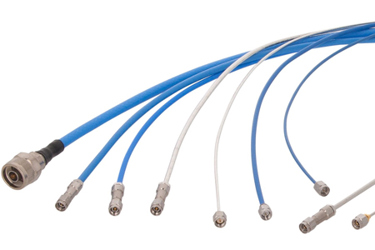
Achieving accurate and repeatable results in RF test and measurement setups depends heavily on selecting the right cable assembly. Often overlooked, cables can become the weakest link in a system, directly impacting signal integrity, phase stability, and overall measurement reliability.
Modern RF cable solutions are engineered to support a wide range of high-frequency applications, with some designs operating up to 70 GHz, 100 GHz, or even 145 GHz. These high-performance assemblies deliver low insertion loss, excellent return loss, and strong shielding effectiveness—critical for maintaining signal fidelity in demanding environments.
Flexibility and mechanical durability are equally important considerations. Advanced cable families offer long service life, often exceeding 100,000 flex cycles, while maintaining stable electrical performance under bending and movement. This makes them ideal for dynamic test setups, high-density configurations, and applications requiring frequent reconfiguration.
Phase and amplitude stability—especially under temperature variation and mechanical stress—are key factors in precision measurement. Many high-end cable assemblies are designed to remain stable across wide temperature ranges, ensuring consistent performance in both lab and field environments.
With a variety of options including flexible, semi-rigid, and ultra-compact designs, engineers can tailor cable selection to meet specific application needs. By carefully balancing electrical performance, mechanical properties, and environmental requirements, the right RF cable enables more reliable testing, improved accuracy, and greater confidence in measurement results.
Get unlimited access to:




Enter your credentials below to log in. Not yet a member of RF Globalnet? Subscribe today.