
Performance Vs Flexibility: Phase-Stable Microwave Assemblies For Dynamic Temperature Environments
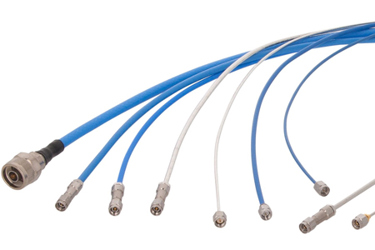
PTFE has long been the preferred dielectric material for high-performance RF and microwave cable assemblies, valued for its strong electrical, mechanical, and environmental properties. However, it comes with a known limitation: a molecular transition at room temperature—commonly referred to as the “PTFE knee”—that can cause abrupt phase shifts. For applications such as high-resolution radar, where signal integrity is critical, this behavior presents a significant challenge.
Historically, engineers have been forced to choose between flexibility and phase stability. While alternative materials like silicon dioxide can offer improved thermal phase stability, they come with trade-offs including reduced flexibility, higher insertion loss, and more complex integration due to rigid form factors.
New advances in dielectric technology are changing this equation. Foamed fluoropolymer dielectrics provide a breakthrough by significantly improving phase stability across wide temperature ranges while maintaining the flexibility and handling characteristics engineers expect from traditional coaxial assemblies. This enables consistent signal performance without the mechanical constraints associated with rigid alternatives.
In addition to enhanced thermal stability, these cable assemblies deliver strong insertion loss performance, excellent shielding effectiveness, and reliable operation under mechanical stress such as bending. This combination supports high-frequency applications, including those operating into V-band ranges.
By eliminating the need to compromise between electrical performance and mechanical flexibility, next-generation dielectric solutions offer a more balanced and efficient approach to RF system design, improving accuracy, reliability, and ease of integration in demanding environments.
Get unlimited access to:




Enter your credentials below to log in. Not yet a member of RF Globalnet? Subscribe today.