
Best RF Cable Assemblies To Use In Communication Systems And Testing at EuMw 2024 In Paris

ConductRF, a leading builder and supply chain partner of RF and microwave coaxial cable assemblies and wire harnesses, is proud to announce they are exhibiting at the industry’s premier event in Europe, European Microwave Week, in Paris, France, September 22nd-27th, 2024. They will be in Booth #715B with their European representatives, Richardson Electronics. On display will be a wide array of their most popular RF cable assemblies purchased by customers around the world for RF and microwave communication system applications and vector network analyzer (VNA) test benches.
The Best and Most Often Used RF Cable Assemblies in Communication and Military Systems
RF and microwave communication systems, both commercial and military, rely heavily on robust and specialized RF cable assemblies. These assemblies are crucial for transmitting signals with minimal loss, ensuring the efficiency and reliability of the overall system. According to ConductRF, these are the best and most frequently used RF cable assemblies in both commercial RF/microwave communication systems and military applications, such as radio, radar, and electronic warfare (EW) systems.
1. Flexible Coaxial Cables
- Common Uses: These cables are widely used in both commercial communication systems and military applications. Flexible coaxial cables are found in radio frequency transmission lines, where their ability to bend and fit into tight spaces makes them highly adaptable. Popular cable assembly choices include MIL-DTL/RG; twin-shielded; and low PIM.
- Advantages: Durability, flexibility, and availability in various performance grades (such as low-loss options).
- Applications: Jumper cables in wireless base stations, cabinet interconnects in satcom systems, and connections in military radar systems, where flexibility and durability under stress are critical.
2. Semi-Rigid Coaxial Cables
- Common Uses: Known for their superior signal transmission performance, semi-rigid coaxial cables are used where minimal signal loss and stable performance are essential.
- Advantages: These cables offer excellent shielding and very low signal attenuation, making them ideal for high-frequency applications in both commercial and military systems.
- Applications: Precision interconnections in microwave communication systems, military radars, and EW systems, where low signal loss is crucial for system accuracy.
3. Hand-formable RF Coaxial Cables
- Common Uses: Hand-formable RF cable assemblies are widely utilized in applications where space constraints or unique routing paths require a flexible, customizable solution. They are often used in:
- Prototyping and design validation due to their ease of manipulation and reconfiguration.
- Low-volume production where pre-defined cable shapes are impractical.
- Test equipment setups, where cables must be rerouted frequently
- Advantages:
- Flexibility: Unlike standard semi-rigid cables, hand-formable cables can be shaped by hand without requiring special tools, offering more adaptability in tight or complex spaces.
- Time-Saving: Their ease of formability simplifies the installation process, reducing setup times, especially in applications with unique or evolving layout requirements.
- Reusability: Unlike fixed-shape cables, hand-formable assemblies can be reshaped multiple times, offering versatility in prototype and test scenarios.
- Cost-Effective for Customization: Without the need for tooling, they provide a cost-effective solution in custom, one-off, or limited-run designs.
- Applications:
- Aerospace and Defense: Used in radar, communication systems, and avionics where flexibility is key due to complex system layouts.
- Telecommunications: Deployed in base stations, satellite communications, and test setups for 5G and other advanced wireless technologies.
- Medical Devices: Ideal for imaging systems and other RF-enabled medical devices that require precise, space-saving routing.
- Test and Measurement: In lab environments where cables are frequently connected and reconfigured, hand-formable cables ensure a robust, flexible connection solution.
These assemblies strike an ideal balance between the rigidity of standard coaxial cables and the flexibility needed for dynamic, complex installations.
4. High-Frequency RF Cables
- Common Uses: These are specialized for high-frequency applications, such as in military radar and electronic warfare systems that require operation in high frequency ranges.
- Advantages: These cables offer low attenuation and are designed to handle frequencies well into the microwave range, ensuring minimal signal loss even at very high frequencies.
- Applications: Radar systems, satellite communications, and EW systems, where high frequency signal integrity is mission-critical. Multi-port solutions include the popular D38999 series and VITA 67 design.
5. Phase-Stable Coaxial Cables
- Common Uses: Phase-stable cables are often used in applications where phase consistency over varying temperatures and mechanical stresses is crucial.
- Advantages: These cables maintain a stable phase over a range of environmental conditions, making them indispensable in military communication and radar systems that operate in harsh environments.
- Applications: Military radio systems, EW systems, and radar, where maintaining signal synchronization is critical.
The Best and Most Common RF Test Cable Assemblies Used with Vector Network Analyzers (VNAs) to Ensure Optimal System Performance and Safety of Personnel
In high frequency engineering and production test environments around the world, ConductRF’s cable assemblies play a critical role in testing, calibration, and performance verification of RF and microwave components and subsystems. One of the primary tools used in these environments is the Vector Network Analyzer (VNA), which measures the performance of RF devices, circuits, and assemblies.
"Making the right choice of cable, connector, and termination styles is vital to ensure accurate, long-term test measurements, as any signal degradation or phase instability can lead to incorrect test documentation. An over-used, low quality test cable can ultimately have serious effects on the personnel using systems that include improperly tested devices.”
- Dean Gammell, Director of Business Development at ConductRF
1. Precision Test Cables
- Common Uses: Precision test cables are specifically designed for use with VNAs and other RF/microwave test equipment.
- Advantages: These cables feature high-quality shielding and low insertion loss, ensuring minimal signal degradation. They are also phase-stable, ensuring accurate and repeatable measurements over multiple test cycles.
- Applications: Used extensively in VNA calibration and testing environments, where accurate impedance and S-parameter measurements are required. These cables are ideal for production line testing of RF components and systems, such as antennas, filters, and amplifiers.
2. Phase-Stable Test Cables
- Common Uses: Phase-stable cables are essential when testing requires consistent phase response across multiple tests, particularly in high-frequency and temperature-sensitive applications.
- Advantages: These cables maintain phase stability over a wide range of mechanical and thermal conditions, minimizing variations that can affect VNA measurements.
- Applications: Used in RF component testing, including power amplifiers, filters, and high-precision antennas. Phase-stable test cables are also essential in production environments, ensuring uniformity and reliability in mass-produced RF systems.
3. Low Loss Test Cables
- Common Uses: Low loss test cables are used in applications where signal integrity and minimal attenuation are critical, especially when measuring small signals or in systems operating at high frequencies.
- Advantages: They offer reduced signal attenuation, preserving the integrity of measurements at higher frequencies (GHz range) during VNA testing.
- Applications: These cables are used in engineering environments to test sensitive RF components such as mixers, oscillators, and low-noise amplifiers (LNAs). In production environments, they ensure accurate test results for RF assemblies designed for high performance applications, such as radar and satellite communications.
4. Torque-Stable Cables![]()
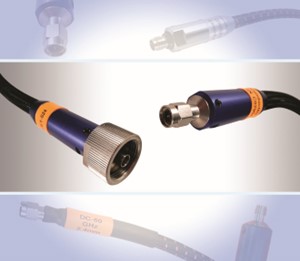
- Common Uses: Torque-stable cables are designed to minimize performance variations due to the mechanical stresses of twisting and bending during testing.
- Advantages: They provide consistent electrical performance under repeated movement, ensuring reliable test results when cables are connected and disconnected multiple times.
- Applications: Used in high-repetition VNA test environments, where cables are frequently handled, such as during production line quality control testing. They are particularly valuable in environments that require frequent reconfiguring of test setups.
5. Interconnect Cables
- Common Uses: Interconnect cables are used to link various test instruments together, allowing for versatile test setups and measurement configurations in RF engineering labs.
- Advantages: These cables are optimized for low loss and impedance matching, ensuring seamless connections between VNAs, signal generators, and other test equipment.
- Applications: Found in engineering and production test benches, where multiple instruments need to be interconnected for component validation, system debugging, and RF performance verification.
6. Site-FlexTM Ruggedized Field Test Cables![]()
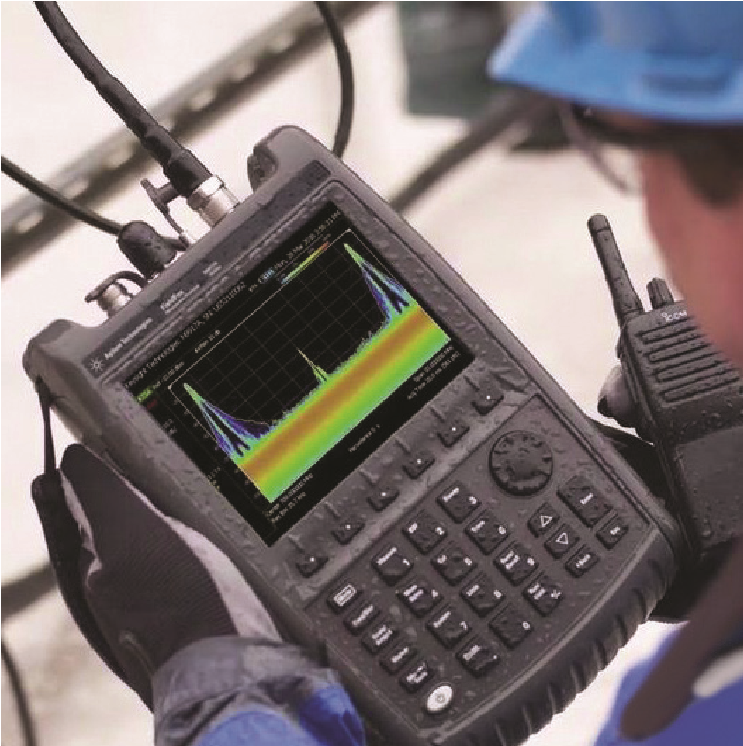
- Common Uses: ConductRF’s proprietary Site-FlexTM Ruggedized Field Test Cables have been specially designed for use with hand-held field RF testing devices such as Keysight’s FieldFoxTM handheld RF and microwave analyzers
- Advantages: The ruggedized construction includes anti-torque connectors that are firmly attached to the cables external armor. Crush resistant SF series cable can withstand 1,200lbs/sq.in.
- Applications: The need for dependable fielduse RF testing cables has become paramount in commercial and military RF/microwave system environments around the world.
Look for a Commitment to Quality and Supply Chain Management Expertise
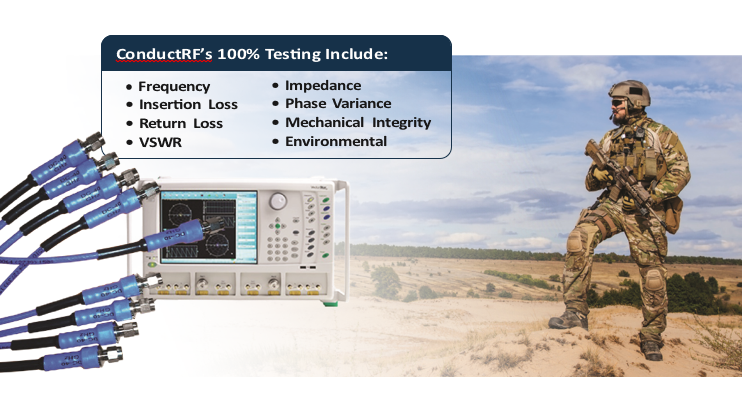
ConductRF’s dedication to quality is evident in their commitment to 100% testing of every unit they ship. Typically, a supplier will do “lot testing” on a few assemblies to ensure the quality of the entire lot. At ConductRF, every cable assembly undergoes rigorous testing (see below) to ensure it meets the highest standards of performance and reliability—and this data is backed up and saved for future reference. This meticulous attention to detail ensures ConductRF’s assemblies not only meet your supply chain needs today, but the data is also available to match up with future lots that your company might order tomorrow.
Conclusion
Choosing the appropriate cable assembly can ensure efficient, reliable, and interference-free signal transmission across a range of demanding applications.
Whether in commercial RF/microwave systems, high-stakes military operations, or high frequency testing applications, selecting the right RF cable assembly can significantly impact system performance, and real-time, in-the-field outcomes. Flexible coaxial cables are valued for their adaptability, while semi-rigid and high-frequency cables offer unmatched performance in precision and high-frequency environments. Low PIM and phase-stable cables are specialized solutions that ensure signal clarity and stability, making them indispensable in both commercial and military sectors.
In test labs and production environments, precision RF test cables ensure minimal signal loss, phase-stable cables provide measurement consistency, and torque-stable options handle mechanical stresses for repeated testing. These cables are not just accessories but critical components in the RF testing and production process, ensuring that both engineering prototypes and mass-produced RF systems meet their performance specifications, and the personnel using systems with these components installed, remain as safe as possible.