
Millimeter-Wave Amplifiers
PRODUCTS AND SERVICES
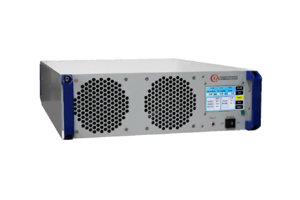
The AMP40044 solid-state, high-power amplifier has a broad frequency range of 26.5 to 40.0 GHz with a power output of 10 watt minimum and 12 watt typical in continuous wave (CW) or pulse mode at Psat, and 8 watt typical at P1dB.
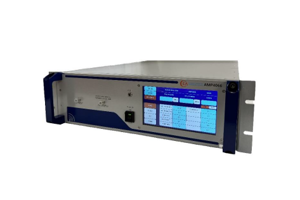
The AMP40037 solid-state, high-power amplifier has an operating frequency range of 26.5 - 40.0 GHz and delivers exceptional performance across various applications, including EMI/RFI, lab testing, CW/Pulse operations, and communication systems.
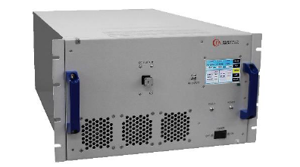
The AMP40032 solid state high power amplifier operates within a wide frequency range of 18.0 - 26.5 GHz with a power output exceeding 60 Watts in CW mode and a minimum of 40 Watts (typical: 50 Watts) at P1dB.

The AMP40017 Suite solid-state, high-power amplifier operates in two high-frequency bands, Band A spanning 18 to 26.5 GHz and Band B covering 26.5 to 40.0 GHz, delivering exceptional performance across a wide frequency range.
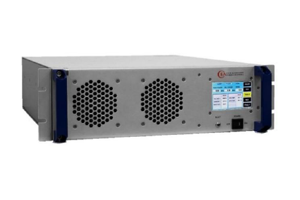
The AMP40015 solid-state, high-power amplifier features an operating frequency range of 18 to 26.5 GHz and delivers a power output of over 12 Watts at Psat and a minimum of 10 Watts at P1dB.
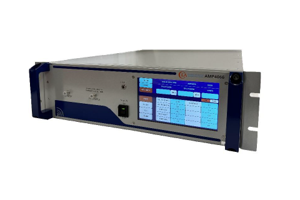
The AMP20005 solid-state, high-power amplifier is engineered for exceptional performance across the entire frequency range of 18.0 – 40.0 GHz for EMI/RFI, lab, CW/Pulse, and all communication applications.

The AMP40018 solid state high power amplifier features an operating frequency range of 8 to 40 GHz and delivers a minimum power output of 10 Watts at Psat and a typical power output of 5 Watts at P1dB.
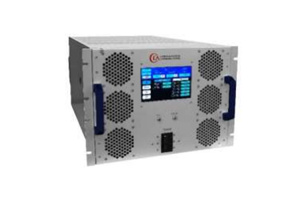
The AMP40035 Solid State High Power Amplifier is designed for EMI/RFI, lab, CW/Pulse and all EW communication applications and features a small form factor and rack-mounted system.
ABOUT
Millimeter-Wave Products
Electromagnetic radiation is a form of wave that varies from radio waves to gamma radiation. Waves, as we know are the way energy travels. Radio waves have been known since the time of Marconi and Hertz. However the electromagnetic radiation that we now know of ranges from the micrometer wavelength to much larger. Waves are characterized by their wavelength and by their frequency. The product of their frequency and wavelength is the speed of the wave. All electromagnetic waves travel at the speed of light. Since speed of light is constant we can deduce that frequency and wave length are inversely proportional. As such when wavelengths are reduced, their frequency is increased and when frequency is increased their wavelengths are reduces. Millimeter waves describe the length of one wave, in this case there are measure in millimeter as such they are below visible light spectrum but are greater than radio waves.
Millimeter waves are being used recently in scanner technology. Scanner technology is a sensitive issue where personal privacy must be weighed against collective security. Air travel in the US and many other countries has been forced to intimately search and scan passengers to a point of embarrassment. This millimeter wave technology will be able to get past the embarrassing searches and scan through clothes for hidden objects, but will not be able to reveal anatomical detail. As such, embarrassing searches are a thing of the past. With millimeter wave technology, airport security can scan every single person without the need to profile or guess. People will be allowed to walk through the scanners and as they proceed, any object that shouldn’t be where it shouldn’t can be identified. The passengers will also not be placed in embarrassing positions and everyone is happy.